Below is our up-to-date travel advice about Peru travel restrictions during Covid-19, provided by the Haku Expeditions team so your adventure to Peru can sail smoothly through the current requirements. Updated October 20th, 2022.
Table of contents
1. Before travel
- What is required to get into Peru?
- Does Peru require a vaccine or a test or both to get into the country?
- Are there any other vaccinations for Peru that are required?
- Passport validity.
- Travel Health Declaration.
- What are the mask requirements for flying into Peru?
- Is there a quarantine requirement for Peru on arrival?
- Should I worry about the travel warnings from the State Gov site about increased crime?
2. During travel
- Requirements to travel around Peru once you arrive.
- Mask requirements in Peru and how they're enforced.
- Mask requirements outdoors and on tour busses.
- Vaccines and restaurants, public transport and national flights.
- Travelling without a vax card.
- Covid restrictions with Machu Picchu.
- Is there a curfew?
- How to travel safely and stay away from crowds.
3. End of travel
- Leaving Peru and getting back into your country.
- Where to get a test to fly home and how long results take.
- How much are molecular and antigen tests in Peru.
- Re-entry into the United States.
- What happens if I get Covid while in Peru.
1. Entry requirements for travel to Peru
What is required to get into Peru?
Complete vaccine card or PCR test, plus a completed health declaration, plus a passport with at least 6 months of remaining validity.
Does Peru require a vaccine or a test or both to get into the country?
The entry requirement to get into Peru is currently one of the following: a complete vaccine card (with last dose 14 days earlier), a negative PCR test taken within 48 hours prior to boarding, or a positive PCR test from the last three months with a medical discharge from your licensed doctor. Children under 12 only need to be asymptomatic.
What counts as a "complete" vax card is whatever your home country considers complete. Only Peruvian nationals and residents need a booster dose.
Before buying flights, check all countries where you'll have a layover and their vaccine/testing/entry requirements. Peru may not require a vaccine with a negative test, or a negative test with a vaccine card, but one of your transit countries might.
Are there any other vaccinations required?
Peru does not require any other vaccines to enter. However, the yellow fever vaccine is highly recommended for travel to destinations below 2,300 m / 7,500 ft such as the Amazon. For the Cusco, Sacred Valley and Machu Picchu region this vaccine is not necessary.
Passport validity
Everyone entering Peru needs a passport with more than six months of validity remaining.
Travel Health Declaration
Everyone entering Peru must fill out a Travel Health Declaration, otherwise known as the Peru Affidavit of Health and Geolocation Authorization Form. It must be completed 72 hours before your trip — ideally well before you arrive at the airport. Airlines do not provide paper health-declarations or offer computers to fill it out. Several travellers have missed flights due to complications. See our step-by-step guide for how to fill out this form.
Mask requirements for flying into Peru
You are no longer required to wear a double mask or any mask on the plane. Face shields are no longer required on airplanes in Peru either.
Quarantine on arrival?
There is no quarantine requirement upon entry to Peru unless you are symptomatic on arrival.
Should I worry about the travel warnings about crime?
If you're traveling to Cusco or the Sacred Valley, rest assured — this is one of the safest places to visit in South America. Local people are kind and generous. Pickpocketing can happen anytime, but there's no increase in crime against travellers or terrorism in the Sacred Valley or Cusco. Lima can be more dangerous and requires extra attention and safety measures.
2. Travel restrictions once you've arrived in Peru
Requirements to travel around Peru once you arrive
You may be required to have a complete vaccine card OR a negative PCR for some places, but no longer seems to be strictly enforced.
Mask requirements in Peru and how they're enforced
You are no longer officially required to wear a K-95 mask or two regular masks in closed spaces and in public. When entering stores, banks and restaurants, you will not need your mask.
Will I need to wear a mask outdoors and on tour busses?
No longer officially required to wear masks even while outdoors. Like most places worldwide, you'll see people fully masked, double masked, with a mask under their chin, without a mask, and with a mask in hand. Some stores will have all employees masked; others will have none. If you're after a mask-free trip, ask your travel agency about a private tour where you can travel in a private car and enjoy activities mask-free.
Are vaccines required for restaurants, public transport and national flights?
Yes, the vax card is officially required to enter closed spaces such as restaurants and stores, and for public transport, interprovincial busses, the train to Machu Picchu, and national flights. A negative PCR also counts for transport. As of October, we have not once been asked for the vaccine card to enter banks, malls and other places where it was commonly requested.
Travelling without a vax card
Although officially required, most local restaurants, bodegas, cafes and shops in the Cusco and Sacred Valley region are not asking for proof-of-vaccination. Banks and chain restaurants like Starbucks or large chain grocery stores will ask. Most of Cusco and the Sacred Valley are mom-and-pop shops where you can enter freely. If you're on private tours or in private taxis, public transport won't come up. You can use a PCR test if you plan to use a public bus or fly domestically. For the train to Machu Picchu, a negative PCR test is a valid alternative to the vax card.
Covid restrictions with Machu Picchu
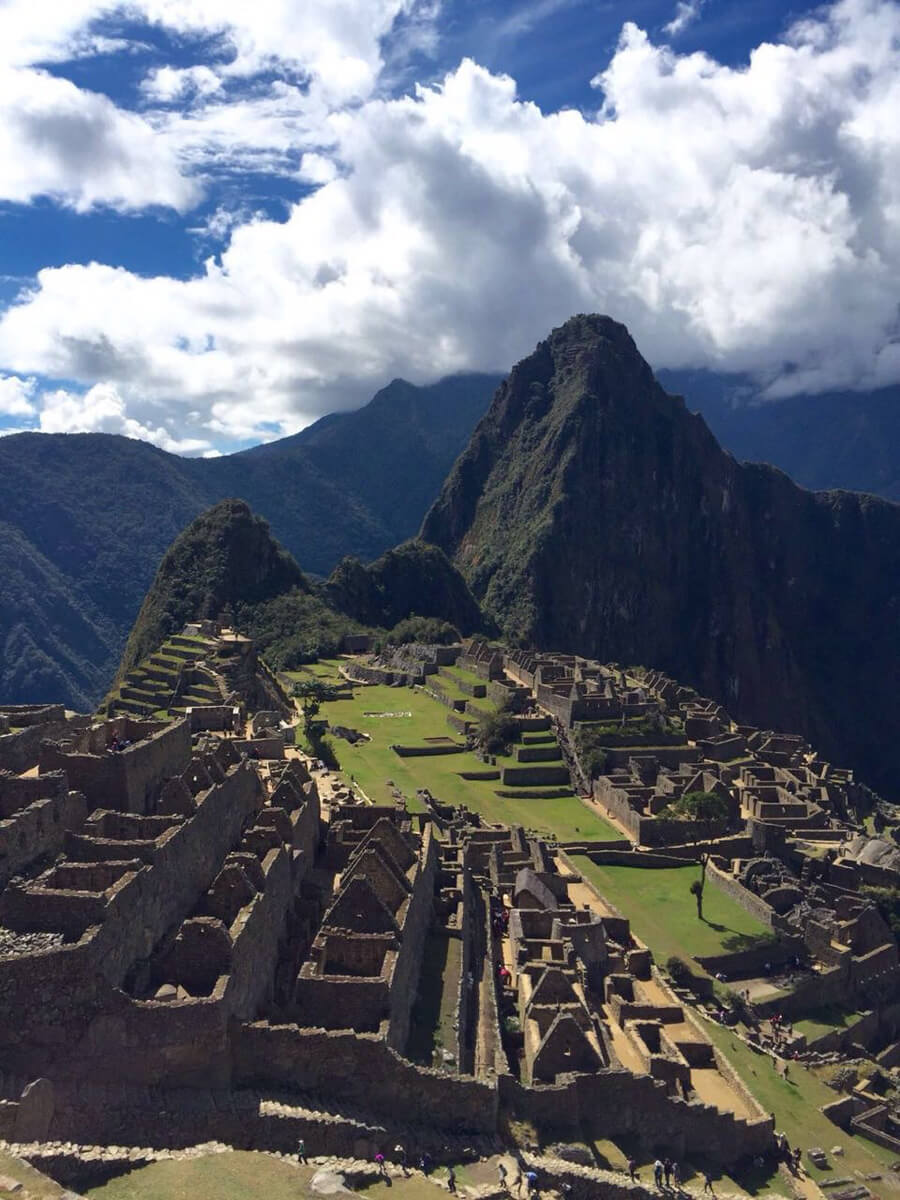
Machu Picchu is not requiring the vax card or masks. You are no longer required to wear a mask on the train to Machu Picchu, nor provide a vax card or PCR test.
Curfew?
Update as of January 27th: there is no longer a curfew in Peru.
How to travel safely and stay away from crowds
For a trip with less contact with large groups, look into private custom tours. You'll be with one guide and one driver most of your trip, rather than sharing a bus with different tourists daily. Avoid the most popular tours and ask for something off the beaten path. For instance, the coveted "Inca Trail Trek" allows 500 people on the trail daily, sharing bathrooms and kitchen tents. Recently 100 people were infected on the Inca Trail with Covid due to this style of tour. Choose one of the many other Inca Trails in Peru to hike far from crowds — or skip the Inca trails altogether and head to the Ausangate area with pristine glacial lakes, herds of alpacas and hot springs.
3. Leaving Peru and returning home
Leaving Peru and getting back into your country
All travelers leaving Peru will need to fill out the health affidavit once again before flying. For national flights within Peru you'll need either the vaccine card or a negative PCR test.
Where to get a Covid test to fly home and how long results take
Due to the volume of tourism in Peru there are many places where you can get tested. Almost all labs in Peru offer PCR and antigen tests. Results can be as quick as 15 minutes or take up to 24 hours. If you're travelling without a trusted tour agency, ask a lab at your final destination for prices and time frames — some labs only do PCR tests M-F during certain windows. If you're with an agency, they'll tell you when and where to test.
Different countries require different information on the Covid-19 test to accept it on arrival (address and name of lab, name of traveler, document number, etc.). Check requirements before you buy a test.
How much are molecular and antigen tests in Peru?
The antigen test runs 90–150 soles, with results often back between 15 minutes and 2 hours. Have the lab's phone number on hand as they sometimes forget to email results. The Molecular PCR test runs 350–450 soles per test and may be returned in as little as a few hours to 24 hours.
Entry into the United States
All US nationals are no longer required to provide a vax card or Covid test to enter. Non-residents are still required to provide a vax card. See the US embassy site for the latest updates.
For any other questions please email info@hakuexpeditions.com.